
Water Softener Installation & Repair in Everett, WA
Everett's municipal water is moderately hard, and a failing or aging softener shows up as scale buildup on fixtures and reduced appliance efficiency before most homeowners notice.
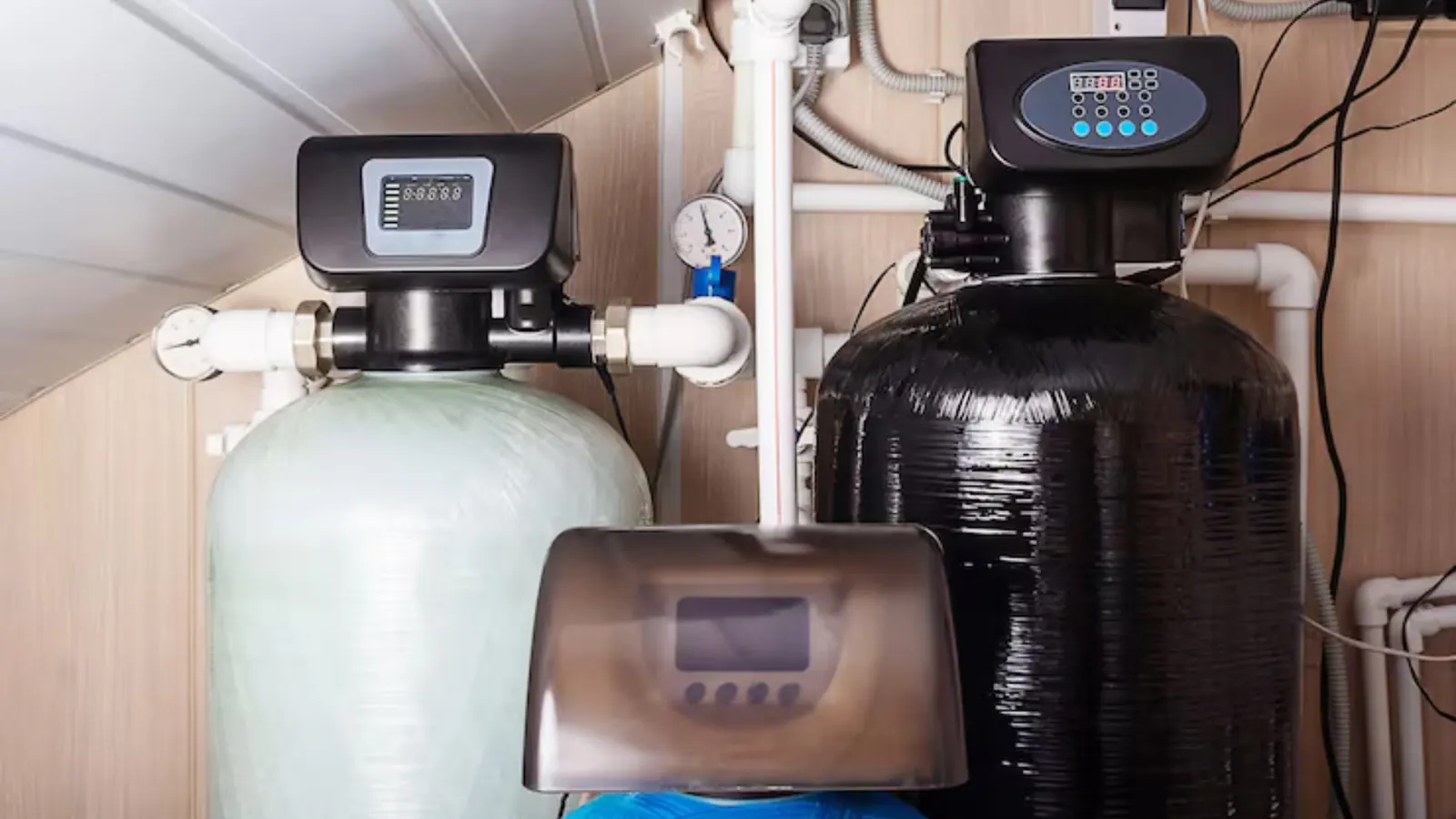
A water softener removes the calcium and magnesium minerals responsible for hard water, which cause scale buildup on fixtures, reduced soap and detergent effectiveness, and accelerated wear on water-using appliances over time. We install new softener systems and repair existing units, including resin tank service and control valve repair on units that are still salvageable.
A softener that's stopped regenerating properly, or one that's simply reached the end of its resin bed's usable life, will let hard water pass through untreated even though the unit still appears to be running.
Water Hardness in Everett and Surrounding Areas
Municipal water hardness varies by neighborhood and source, and some areas served by wells or with groundwater influence, more common toward Mill Creek and the eastern parts of the service area, see noticeably harder water than others. Over years of use, hard water leaves mineral scale inside water heaters, faucets, and appliances, which is one reason we frequently find scale-related water heater issues in homes without a functioning softener.
A softener's resin bed has a finite service life, typically 10-15 years depending on water hardness and household usage, after which regeneration becomes less effective even if the control valve is still functioning correctly. We install systems certified to NSF/ANSI 44, the standard drinking water treatment industry benchmark for ion exchange water softeners.
Signs You Need Softener Service
- Visible white, chalky scale buildup on faucets, showerheads, and glassware.
- Soap and detergent not lathering or rinsing as effectively as they used to.
- A noticeable change in water taste or a salty taste if the unit is over-regenerating.
- The softener isn't cycling through its regeneration schedule as expected.
- Reduced water pressure that improves noticeably when the softener is bypassed.
Diagnosing a Softener Problem
We test water hardness before and after the softener to confirm it's actually treating the water correctly, since a unit can appear to be running through its full cycle while the resin bed is too depleted to soften water effectively.
For a unit that's not regenerating on schedule, we check the control valve's timer or sensor settings and the brine tank's salt level and condition, since a clogged brine line is a common and inexpensive fix that's often mistaken for a bigger problem.
Repair, Resin Replacement, or Full System Replacement
A control valve or timer issue is typically a straightforward repair on an otherwise sound system. A depleted resin bed can often be replaced within the existing tank rather than requiring a full new system.
For a unit that's failed structurally or is simply undersized for the household's actual water usage, full replacement with a properly sized system, and pairing it with whole-home filtration if water quality concerns go beyond hardness, is usually the better long-term investment.
What Affects Water Softener Cost
Cost Factors
- Repair type: a control valve repair costs far less than resin replacement or a full new system.
- System capacity: a larger household needs a higher-capacity softener, which costs more.
- Water hardness: harder source water may call for a higher-capacity or dual-tank system.
- Installation location: a tight utility space can add labor time for new installations.
- Salt delivery: some households opt for scheduled salt delivery service, a separate ongoing cost.
Water softener installation, repair, and maintenance are homeowner expenses, not typically covered by insurance.
Want your real number? Call (425) 845-0257.
What to Check Before You Call
- Check the brine tank's salt level, since a low or empty tank is the most common simple cause of soft-water failure.
- Look for visible scale buildup on faucets and showerheads as a sign the softener isn't working.
- Note whether the unit is cycling through regeneration on its normal schedule.
- Check the age of your current system, since units over 10-15 years may need resin replacement.
- Note if a salty taste has appeared, which can indicate an over-regeneration setting issue.
Water Softener Questions
How do I know if my softener still works?
Testing water hardness at a faucet, both before and after the softener, is the most reliable way to confirm it's actually treating the water rather than just running through its cycle.
How long do water softeners typically last?
The resin bed typically lasts 10-15 years depending on water hardness and usage. The control valve and other components can sometimes fail sooner and be repaired independently.
Is Everett's water hard enough to need a softener?
It varies by area and source. Testing your specific water hardness is the most accurate way to know whether a softener would meaningfully help your household.
Can a water softener help my water heater last longer?
Yes, in homes with hard water, reducing mineral scale buildup inside the tank typically extends water heater service life.
Do you serve areas outside Everett?
Yes, including Mill Creek, Snohomish, Lake Stevens, Mukilteo, and Edmonds.
Dealing With Hard Water in Everett?
Call now to schedule softener repair or a new system installation.