
Repiping & Whole-Home Pipe Replacement in Everett, WA
When a home's supply lines are galvanized steel and past their 40-50 year service life, repiping fixture by fixture as leaks appear usually costs more over time than one full project.
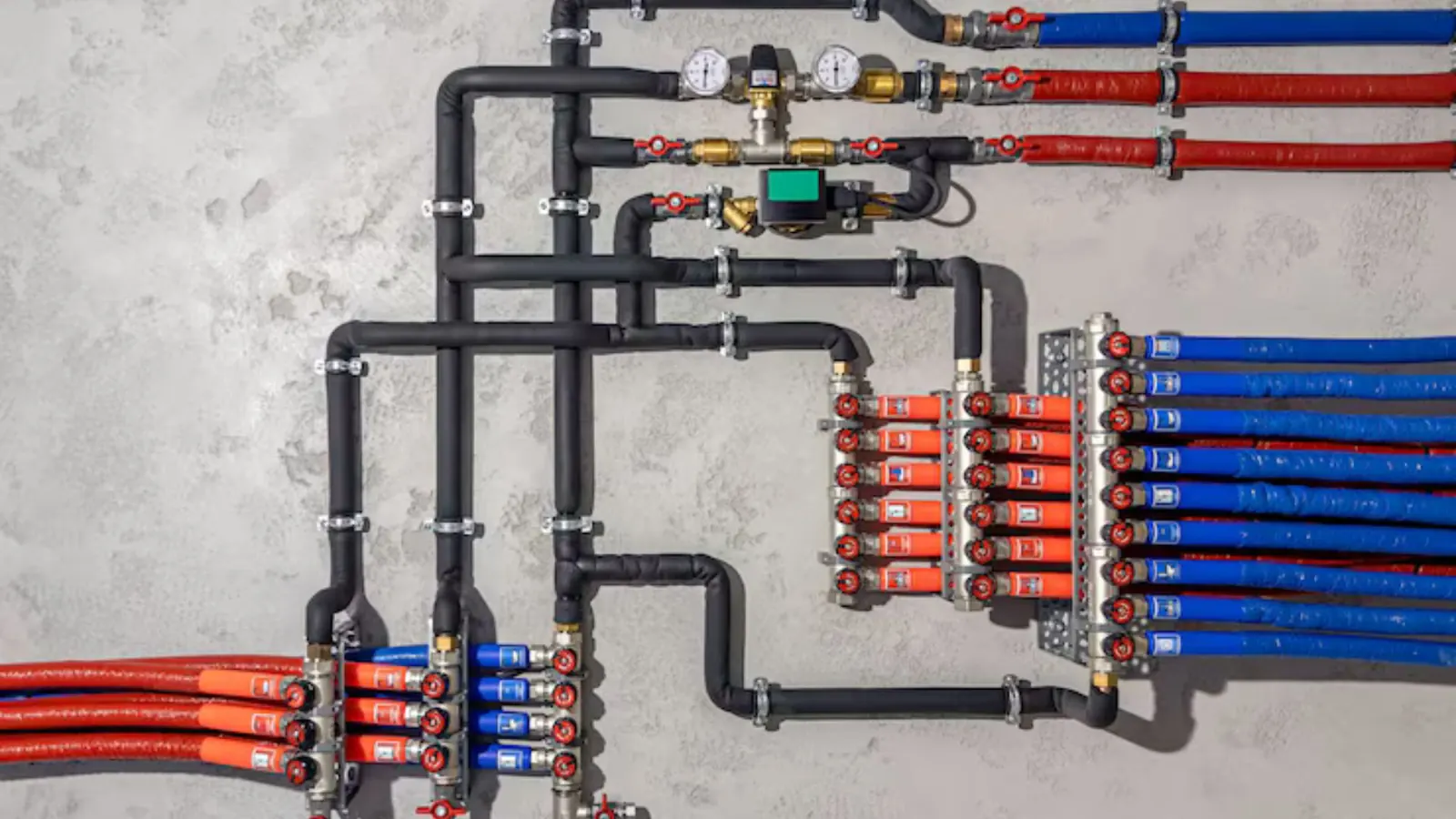
Whole-home repiping replaces a house's aging or failing supply lines with modern copper or PEX piping, typically in a single coordinated project rather than reacting to individual failures as they happen. This is most often the right call for homes with original galvanized steel supply lines, common throughout Everett's pre-1970 housing stock, where one visible leak is usually a sign of broader corrosion throughout the system, not an isolated event.
We assess the full scope of a home's plumbing before recommending repiping, since a home with only partial galvanized runs or a single problem branch may not need a full replacement at all.
Why Whole-Home Repiping Comes Up So Often in Everett
Galvanized steel pipe corrodes from the inside out, and by the time one section fails visibly, the rest of the system has usually been narrowing and weakening on the same timeline, since it was all installed at the same time from the same materials. A homeowner who's had two or three unrelated leaks in different rooms over a couple of years is describing the exact pattern that makes repiping more cost-effective than continued spot repairs.
Reduced water pressure throughout a house, not just at one fixture, is another common sign, since corrosion narrows the interior diameter of galvanized pipe gradually across the entire system, not just at the point that eventually fails.
Signs Your Home May Need Repiping
- Two or more unrelated pipe leaks in different parts of the house within a couple of years.
- Reduced water pressure throughout the house, not just at one fixture.
- Discolored or rusty water, especially noticeable after the water has sat unused for a while.
- Visible galvanized pipe (dull gray, magnetic to a test magnet) in a basement or crawlspace.
- A home built before 1970 with no documented history of prior repiping.
Assessing the Full System Before Recommending Repiping
We inspect accessible pipe sections in the basement, crawlspace, and any exposed runs to confirm material and visible corrosion extent, and we'll check water pressure at multiple fixtures throughout the house to gauge how uniformly the system has degraded.
For a home with a documented history of hidden leaks in different locations, that pattern itself is strong evidence for repiping, even before opening up walls to inspect every run directly.
Copper vs. PEX, and Full vs. Partial Repiping
Copper offers a longer proven track record and higher resistance to physical damage, at a higher material cost. PEX is more affordable, flexible enough to snake through existing wall cavities with less demolition, and has become the standard choice for most residential repiping projects.
A full repipe replaces every supply line in the house. A partial repipe addresses only the sections confirmed to be galvanized or failing, which can make sense when part of a home was previously updated. This is separate from the main water service line from the meter to the house, which is priced and scoped independently.
Not Sure If You Need a Full Repipe or Just a Repair?
If you're calling about a single leak and wondering whether it's worth fixing that one spot or addressing the whole system, the honest answer depends on the age and material of the rest of your home's pipes, not just the one that failed. We'll assess the full system during the same visit and give you a straight comparison of both paths rather than assuming the bigger job is automatically the right one.
Copper vs. PEX for Whole-Home Repiping
| Material | Best For | Relative Cost | Demolition Required |
|---|---|---|---|
| Copper | Long-term durability, exposed runs | Higher | More, due to rigid pipe runs |
| PEX | Most residential repiping projects | Lower | Less, flexible routing through cavities |
What Affects Repiping Cost in Everett
Cost Factors
- Scope: full-home repiping costs more than a partial repipe of specific branches.
- Material: copper costs more upfront than PEX for the same scope.
- Access: finished walls and flooring require more repair and restoration after the pipe work.
- Fixture count: more bathrooms and water-using appliances increase the number of connection points.
- Permits: Everett requires permitting for whole-home repiping projects.
Repiping due to age and material degradation is a maintenance investment, not typically covered by homeowner's insurance. Damage from an actual pipe failure event may be covered separately.
Want your real number? Call (425) 845-0257.
What to Check Before Deciding on Repiping
- Count how many separate pipe leaks or failures you've had in the past 2-3 years.
- Check accessible pipe in a basement or crawlspace for dull gray color and magnetic properties.
- Note whether water pressure feels reduced throughout the house or just at one fixture.
- Ask for a full-system assessment, not just a quote based on the one leak you're calling about.
- Get a clear comparison of spot-repair cost over time versus one repiping project.
Whole-Home Repiping Questions
How do I know if my pipes are galvanized?
Galvanized pipe is dull gray and magnetic. A magnet will stick to it, while copper and PEX will not. We can confirm during an assessment.
How long does a whole-home repipe take?
Most residential repiping projects take 2-4 days depending on home size, material choice, and whether walls need to be opened and repaired afterward.
Will repiping affect my whole house at once, or can it be done in sections?
Both approaches are possible. A phased repipe can reduce disruption but may cost slightly more overall than one coordinated project.
Is PEX as durable as copper?
For most residential applications, yes, though copper has a longer proven track record and better resistance to physical damage in exposed locations.
Do you serve areas outside Everett?
Yes, including Edmonds, Mukilteo, Snohomish, Lake Stevens, and Mill Creek.
Considering a Repipe?
Call now for a full-system assessment and an honest repair-vs-repipe comparison.